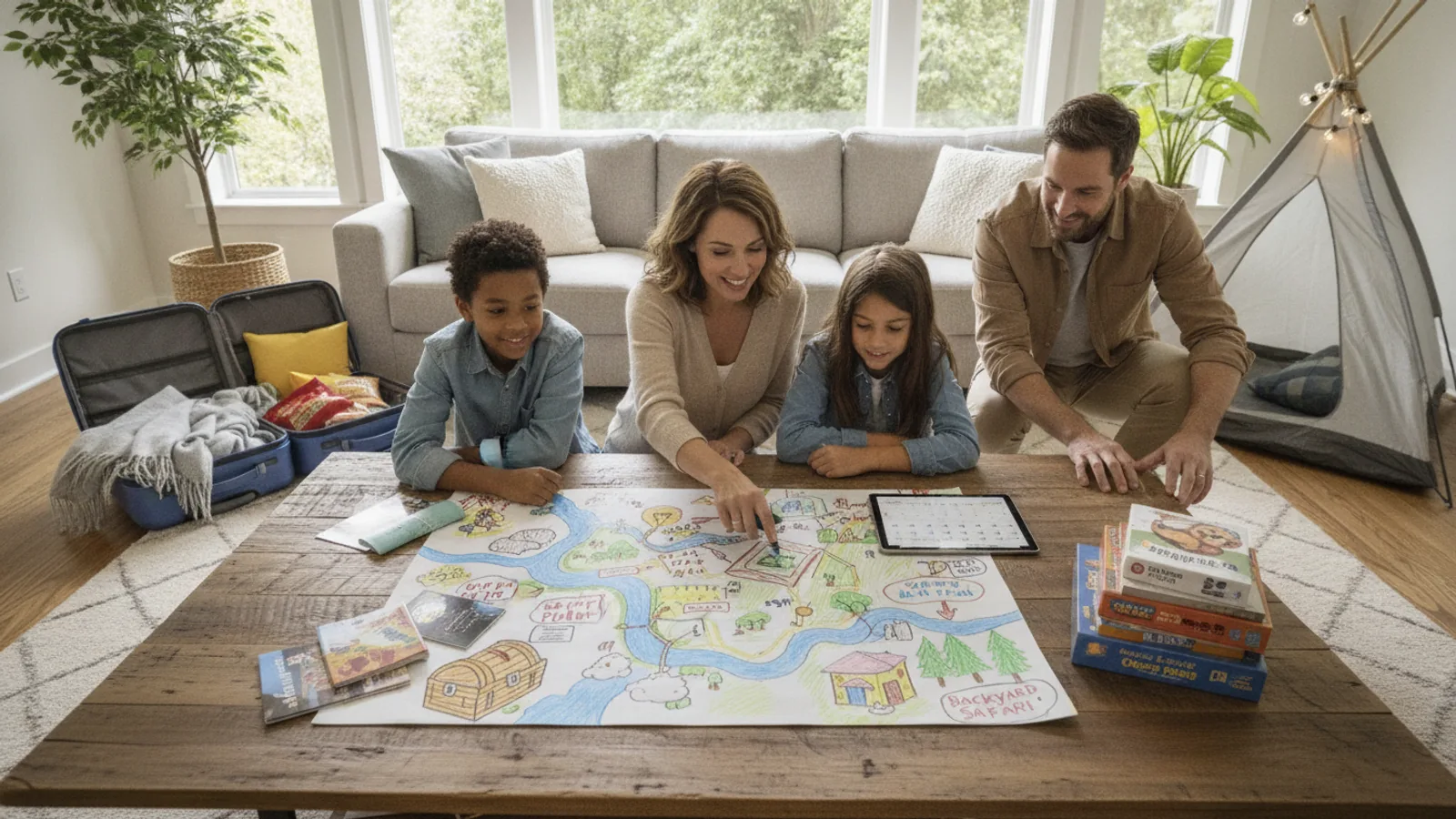
How To Plan A Family Staycation
A family staycation is a planned break at or near home that gives everyone a sense of adventure without the stress of travel. This guide helps you create a memorable staycation by setting clear goals, preparing your home and meals, building a flexible daily schedule, and handling common hiccups. You'll learn how to involve the whole family in planning, set boundaries for work and digital distractions, and design activities that suit different ages and energy levels. The guide also covers quick fixes for boredom or weather changes, plus advanced ideas like themed evenings and neighborhood explorations. By following these steps, you can transform ordinary days into a refreshing mini-vacation that leaves everyone feeling connected and recharged.
Fast Answer
- Decide on a start and end date, then set a simple goal like 'relaxing together' or 'exploring local parks' so you can design activities that match your family's interests.
- Prepare your home by cleaning key areas, planning simple meals based on one grocery trip, and organizing a family 'fun box' with games, crafts, and outdoor gear to keep everyone engaged.
Before You Start
- Pick specific dates for your staycation and mark them on a family calendar, treating them like real vacation days to protect the time from work or other obligations.
- Brainstorm with each family member to list three activities they want to do, then mix those ideas into a rough daily plan that includes active time, quiet time, and mealtimes.
- Stock up on snacks and basics, and prep several easy meals in advance (like a big batch of pasta or sandwich ingredients) to avoid cooking stress during the break.
- Create a 'staycation box' with children's books, board games, craft supplies, and outdoor toys, and put it somewhere visible to build excitement and easy access.
Step-by-Step Instructions
Define Your Staycation Goals and Dates
Start by choosing a block of two to four days that feels like a true break, ideally including a weekend or a couple of days off from work. Then, gather your family and ask everyone to name one thing they want to do or feel during this time. For example, a parent might say 'I want to read a book outdoors' and a child might say 'I want to bake cookies.' Write down each wish without judging it. From these ideas, define two or three clear goals, such as 'relax, cook together, and explore a new park.' These goals will guide every activity you plan later, so they are worth thirty minutes of thought. After you set your goals, mark the dates on a shared family calendar and treat them as official. This simple act signals to you and your household that these days are special, not just a gap in your regular routine.
Prepare Your Home for Relaxation and Play
A staycation works best when your home feels like a destination, not a to-do list. Begin by dedicating one hour to tidying the main living areas—the living room, kitchen, and any outdoor space you will use. You do not need to deep-clean, but a clear table and floor make activities feel more inviting. Next, set up a few simple zones: a reading corner with cushions and a basket of books, a craft table with paper and markers, and a game shelf with board games and puzzles. If you have a yard or balcony, sweep it and bring out a blanket or lawn chairs. Then, plan your meals for the entire staycation, writing down a quick menu for breakfasts, lunches, dinners, and snacks. Aim for dishes that use common ingredients, and do one pre-stay grocery run so you do not have to shop mid-break. Finally, assign each family member a small job, like filling water bottles or assembling snack boxes, so that everyone contributes to the setup.
Create a Flexible Daily Schedule Together
Having a loose structure prevents boredom and keeps the day flowing, but you must avoid packing every hour. Sit with your family and sketch a simple daily rhythm that includes three or four activity blocks. For instance, a morning block for an outdoor adventure, an afternoon block for creative projects, and an evening block for a family movie or game. Leave at least two open slots of thirty to sixty minutes for spontaneity, such as reading, napping, or chatting. Write the schedule on a large piece of paper and post it on the fridge, using pictures or emojis for younger children. When you plan an activity, pick a specific time and a backup in case the weather changes. Also, agree on a 'quiet hour' after lunch when everyone can do something independent, like drawing or solo reading. This schedule helps you feel like you are on vacation, but it also leaves room for what truly matters—being together without rushing.
Set Boundaries for Work and Digital Screens
Because you are at home, the temptation to check work emails, scroll social media, or tidy up will be strong. To protect your staycation, you must set clear boundaries before day one. Start by telling your workplace or school contacts that you are on a staycation and will be offline, just as you would for a trip away. If you need to be reachable for emergencies, agree on a specific short check-in time, like 10 minutes after breakfast. Next, set up a physical rule: phones go into a basket or a drawer during planned family activities, and screens are allowed only during designated 'screen time' slots, such as after dinner. Use a timer to enforce these limits. Also, assign a 'home chore pause'—decide together that you will not do major cleaning or laundry during the staycation, except for quick wipe-downs. If a family member breaks the boundary, gently remind them of the goal, and redirect to the current activity.
Run Engaging Activities That Fit Your Family
The heart of a staycation is the activities you choose. Pick a mix that matches your family's energy and interests, and remember that simple often works best. For each day, plan one main outdoor or active option, such as a nature walk, a bike ride, or a backyard obstacle course. Then add a creative project, like painting rocks, building a cardboard castle, or writing a family story together. Do not forget low-cost indulgences like a themed movie night, a dessert-making session, or a family card tournament. Rotate who gets to choose the afternoon 'surprise' from your pre-prepared list to keep everyone involved. On each activity, give yourselves permission to launch or cut it short based on mood and weather. The goal is not to check off every plan, but to spend quality time together in a relaxed, playful way. If an activity flops, laugh it off and move to the next idea without guilt.
Wrap Up with a Family Reflection and Gratitude
A staycation ends, but its benefits can linger if you close it with a family reflection. On the final afternoon, gather everyone in a comfortable spot, such as the living room floor or a picnic blanket. Give each person a chance to share one favorite moment, one funny moment, and one thing they would repeat next time. Write these down on a large sheet of paper or a whiteboard. After sharing, spend ten minutes creating a 'staycation memory jar': have each person write a short note about a highlight on a slip of paper and place it in a jar. Keep the jar somewhere visible as a reminder of your time together. Then, do a quick cleanup: return the craft supplies and games to their usual spots, but leave the memory jar out. Finally, as a family, briefly discuss what you learned about how to have fun at home, so you can make your next staycation even better.
Quick Reference
| Situation | Action | Why it helps |
|---|---|---|
| It is 10 a.m. and the kids are complaining that they are bored. | Pull out the 'surprise activity' envelope you prepared, open it together, and commit to doing that activity right away for at least thirty minutes. | Having a pre-decided backup takes away the need to negotiate on the spot, so you quickly redirect energy into a playful task instead of arguing or turning on screens. |
| A planned outdoor picnic is ruined by sudden rain. | Move the picnic to the living room floor on a blanket, serve the same food, and play an indoor 'camping' game like making a tent with chairs and a sheet. | Shifting the location but keeping the spirit of the activity preserves the fun and teaches kids that plans can adapt without losing the experience. |
| You feel the urge to check work email during a family board game. | Mentally repeat your staycation boundary phrase, put your phone in the designated basket, and say out loud, 'I’m on staycation, I’ll check later at 5 p.m. if needed.' | Verbalizing the commitment makes you more accountable, and the phone basket physically removes the distraction, helping you stay present and enjoy the game. |
Common Issues
- Family members start arguing over which activity to do or how long to spend on it.: Hold a quick family meeting where each person gets one vote. Write the options on separate pieces of paper, draw one from a hat, and set a timer for 45 minutes to try it. Agree that after the timer, you can switch to another idea. Remind everyone that the goal is to have fun, and compromise is part of that. If needed, choose a neutral activity like playing a game that everyone likes, and save the next person's choice for the next block.
- The staycation begins to feel like a regular day at home because chores and clutter creep in.: Reaffirm the 'no chores' rule and physically hide cleaning supplies or put them out of sight. Take two minutes to clear the table if clutter appears, but do not start full cleanup. Instead, set a timer for a 5-minute 'reset' each morning and evening to tidy the main area, and remind yourself that a little mess is okay. If clutter is unavoidable, move the activity to a different room or the yard to maintain the vacation vibe.
- Kids are not sleeping well because the staycation schedule is too exciting or irregular.: Keep bedtimes and wake times within 30 minutes of your usual routine, even on staycation days. Schedule wind-down activities like reading or quiet music for the last 30 minutes before bed. Avoid large meals and sugary snacks right before sleep. If your child is overstimulated, take a short walk after dinner to burn off energy, and dim the lights one hour before bed. Consistency helps everyone rest so they can enjoy the next day.
Advanced Tips
- Transform a classic 'camping night' indoors: pitch a tent (or use blankets), cook dinner on a portable grill or in foil packets in the oven, and tell stories by flashlight inside the living room.
- Plan a 'neighborhood exploration' day where you map a route using a simple checklist: find three different flowers, spot a bird, and collect one interesting leaf, then turn your findings into a family nature journal.
- Use a 'staycation passport' where each family member gets a stamp or sticker for every activity completed, and after three stamps, they can choose the next family treat, like a movie night or a special dessert.
Final Checklist
- Agreed on staycation dates, goals, and a family calendar that protects the time from work and school obligations.
- Prepared your home with a tidy living space, activity zones, a family fun box, and a grocery run for all planned meals and snacks.
- Set screen and work boundaries, using a phone basket, a defined check-in time, and a visible reminder about the no-chore rule.
- Held a family reflection at the end, collecting favorite moments, creating a memory jar, and scheduling a tentative next staycation date.
FAQ
How do we handle a staycation if we have very young children who need naps?
Build the daily schedule around your child's nap times. Plan a high-energy outdoors activity in the morning, serve lunch early, and schedule quiet time during the nap slot for older kids to do puzzles or read. Make the staycation room a calm place for the non-nappers: prepare a bin of quiet activities like coloring, playdough, or audiobooks. Accept that you might need to split activities—one parent can stay with the sleeping child while the other takes others outside. Also, keep the overall staycation pace slow; short activities with breaks between work best for tiny attention spans. Remember that the goal is joy, not a marathon, so it is fine to spend a whole afternoon just playing in the backyard.
What if the weather is bad for most of the staycation?
Prepare a list of indoor activities before the staycation begins, so you are not stuck with nothing to do. Include things like building a blanket fort, having a living room picnic, experimenting with simple science projects (like a baking soda volcano), creating a family newspaper, or having an indoor scavenger hunt. You can also use online resources for virtual museum tours or free exercise classes, but remember to screen-free options too. Rotate through the list so you do not repeat too much. Embrace the cozy feeling: light candles, bake cookies, and watch movies together. These indoor days often become the most memorable, because they encourage closeness and creativity. Also, check the forecast daily and rearrange outdoor activities to the driest hours, even if that means going outside for just an hour.
How can we prevent a staycation from turning into a marathon of screen time?
Set explicit screen limits before you start, such as no screens during meals, only one family movie in the evening, and a maximum of one hour of personal screen time in the afternoon. Put phones and tablets in a common basket during activity times. Schedule engaging alternatives, like a morning bike ride, a cooking challenge, or a board game tournament, to fill the hours with active fun. Also, designate 'screen-free hours' from 10 a.m. to 5 p.m. on most days. If you need to check work or messages, do it in a short, timed slot after breakfast. Finally, be a role model: if you stay off your phone, kids are more likely to follow. The key is to make non-screen activities tempting and easy to start.