How To Plan A Family Camping Trip
Planning a family camping trip involves careful preparation to ensure safety, comfort, and enjoyment for all ages. This guide covers choosing a destination, packing essentials, meal planning, setting up camp, and handling common issues. It emphasizes checking weather forecasts, campground rules, and equipment functionality before departing, plus involving children in planning to build excitement and responsibility. With step-by-step instructions and practical tips, you'll be ready to create lasting outdoor memories.
Fast Answer
- Start by selecting a family-friendly campground with amenities like restrooms, potable water, and easy trails. Check the weather forecast and reserve your site early, especially for peak season, to avoid disappointment.
- Create a comprehensive packing list that includes shelter, sleeping bags, clothing layers, cooking gear, food, water, first-aid supplies, and entertainment. Test all equipment at home before the trip to ensure it works and fits properly.
Before You Start
- Choose a destination that matches your family's experience level and interests. Consider travel time, available activities, and proximity to medical facilities. Read recent reviews from other families to gauge suitability.
- Reserve your campsite well in advance, especially for weekends and holidays. Confirm the reservation, note the check-in and check-out times, and understand the campground's specific rules regarding quiet hours, pets, and campfires.
- Check weather forecasts for the area several days before departure and again on the morning you leave. Pack clothing and gear for both warm and cool conditions, and have a backup plan in case of severe weather.
- Involve each family member in planning by assigning small tasks, such as picking a meal or choosing an activity. This builds anticipation and a sense of ownership, making the trip more enjoyable for everyone.
Step-by-Step Instructions
Choose Your Campsite Wisely
First, decide on a campground that fits your family's needs and skill level. Look for sites that offer basic amenities such as clean restrooms, potable water, and designated fire rings. Consider the distance from home: a two-hour drive is often ideal for families with young children. Read the campground's official website or call the office to confirm available facilities and any restrictions like quiet hours or pet policies. If you're new to camping, choose a site with easy access to showers and a camp store for forgotten items. Also, check if the campsite is shaded during the afternoon, as direct sun can make tents uncomfortable. Once you've narrowed your options, make a reservation and note the exact location. Before committing, read recent visitor reviews on trusted travel forums to learn about any issues like flooding or noisy neighbors.
Gather and Test Essential Gear
Begin collecting all your camping gear at least one week before departure. Your list should include a tent that accommodates your family plus one extra person, sleeping bags rated for the expected low temperature, sleeping pads for insulation and comfort, lanterns and flashlights with fresh batteries, and a reliable camp stove with fuel. Set up the tent in your backyard to ensure all poles and stakes are present, and practice folding it back into its bag. Have each family member sleep in their sleeping bag overnight to confirm warmth and fit. Test the camp stove by cooking a simple meal, and check all zippers on tents and clothing. If you borrow gear, verify its condition yourself. Replace any faulty equipment now rather than waiting until you're at the campsite.
Plan Your Meals and Snacks
Create a detailed meal plan for every day of your trip, including breakfast, lunch, dinner, and snacks. For breakfast, consider easy options like oatmeal or eggs that can be cooked in one pan. For lunch, pack sandwiches, wraps, or trail mix that require no cooking. For dinner, choose simple one-pot meals like chili or pasta that cook quickly and minimize cleanup. Write down the exact ingredients and portion sizes for your family. Pre-measure dry ingredients at home and store them in labeled container to save space. Plan to pack a cooler with perishables and a separate container for dry goods. Remember to include extra snacks that don't need refrigeration, as hiking and outdoor activities increase appetites. Before leaving, check your cooler's ice supply and plan to buy more nearby if needed.
Pack Smart for the Whole Family
Pack strategically by making a checklist and gathering items for each family member. Start with the tent, sleeping bags, and sleeping pads, then move to clothing. Dress in layers: include moisture-wicking shirts, insulating fleece, moisture-resistant outer shell, and extra socks. For each person, pack at least two days' worth of clothes and a separate set for sleeping. Bring sturdy shoes for hiking and sandals for around the camp. Include hygiene items like toothbrushes, unscented soap, and biodegradable wipes. For entertainment, pack a deck of cards, a frisbee, and a nature guidebook. Use clear bins or labeled bags for different categories. When loading the car, place heavier items at the bottom and frequently used items on top. Ensure coolers are secured and accessible. Finally, have a small backpack for each child with water, a snack, and a whistle.
Set Up Camp Efficiently on Arrival
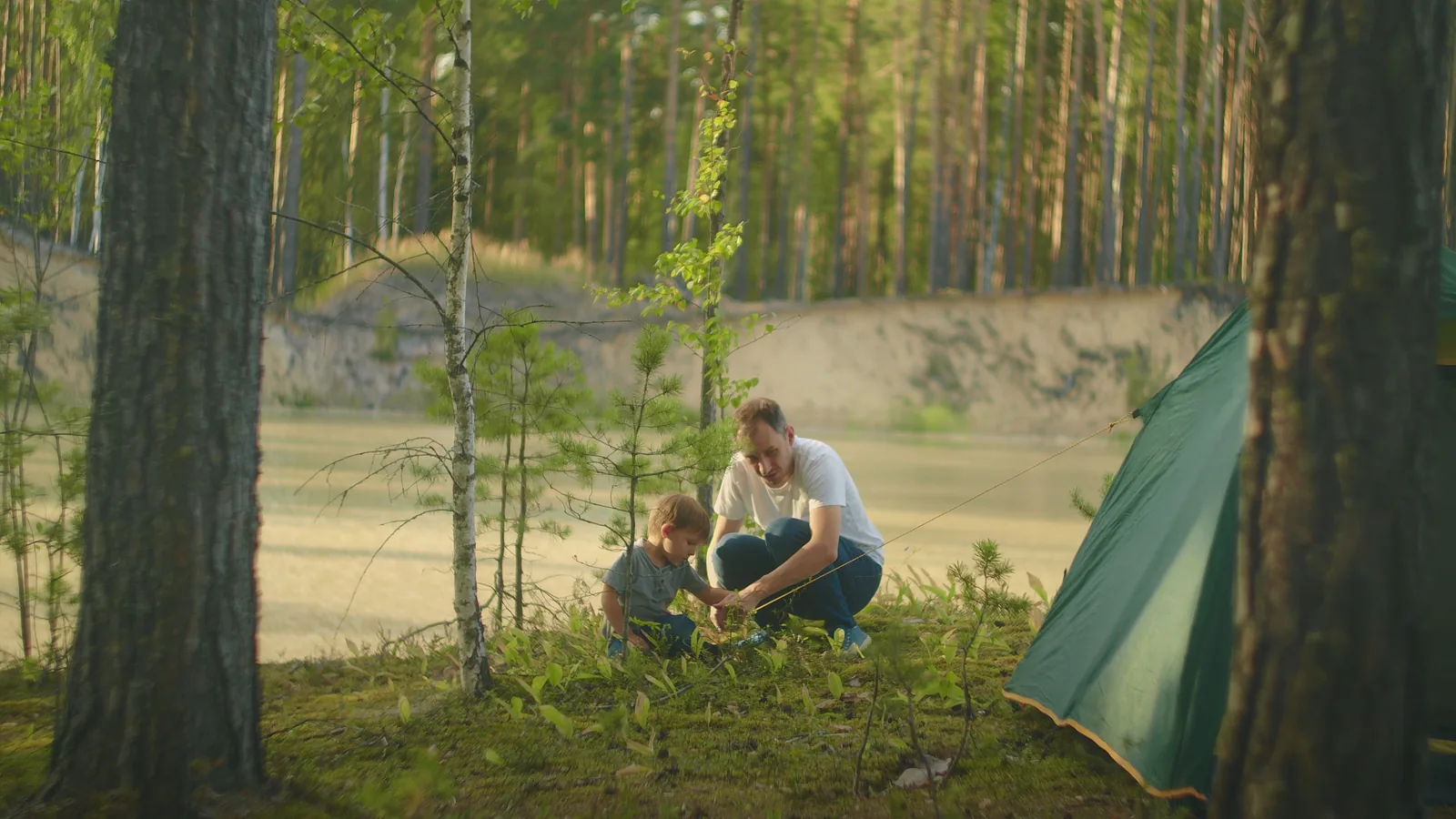
When you arrive at your campsite, first conduct a sweep for hazards like rocks, roots, or sharp objects. Decide where to place the tent, keeping it level and clear of low branches. Lay a ground tarp, then set up the tent according to instructions, ensuring all stakes are secure. Assemble sleeping pads and sleeping bags inside. Next, set up a designated kitchen area with a table or portable camp table for food prep. Keep the cooler in a shaded spot and ensure it's securely latched. Place your camp stove on a flat, stable surface, away from tent walls. Create a separate 'chill zone' with chairs and a tarp for shade. Finally, establish a 'no-food-in-the-tent' rule to avoid attracting animals. Do this before exploring, so you have a safe home base. Put on sunscreen and bug spray before leaving.
Create a Flexible Daily Schedule
After setting up, review the campground map and its activity schedule. Plan a main activity each day, such as a short hike, a nature scavenger hunt, or a swimming session, but leave time for spontaneity. Build in rest periods, especially for younger children, to avoid tantrums. For example, have lunch and a quiet reading time after the morning activity. Check the weather forecast and adjust plans if a storm is predicted. Ensure you return to camp before dark to prepare dinner and enjoy a campfire (if allowed). Involve children in decision-making by offering two choices for the afternoon activity. Keep a basic routine for meals and bedtime, as this provides comfort in a new environment. At dusk, encourage everyone to use the restroom before settling down for the night.
Quick Reference
| Situation | Action | Why it helps |
|---|---|---|
| If a thunderstorm suddenly approaches while you're at camp. | Move everyone into your vehicle or a sturdy building immediately, and avoid open fields and tall trees. | Lightning can strike from miles away, and a vehicle provides protection due to its metal frame conducting electricity safely to the ground. |
| When you discover the campsite lacks a grill grate or fire ring. | Use a portable camp stove for cooking instead of building a fire, and do not attempt to dig an improper fire pit. | Stoves are generally permitted and are safer than creating an unauthorized fire, which could damage vegetation or violate campground rules. |
| If you encounter a bear or other large animal near your food storage. | Stay calm, slowly back away, and do not run. Secure food in a bear-proof container or hang it per campground instructions. | Running may trigger a chase response, and properly securing food prevents the animal from associating humans with food, reducing future conflicts. |
Common Issues
- Tent leaks during unexpected rain.: Use a waterproof tarp as a footprint under the tent, and ensure the rainfly is properly secured and seams are sealed with seam sealer if needed.
- Family members get sunburned despite cloudy weather.: Apply broad-spectrum sunscreen with SPF 30 or higher to all exposed skin, including lips, even on overcast days, and reapply every two hours or after swimming.
- Children complain of boredom.: Pack a few small toys like a soccer ball or puzzle book, and create a scavenger hunt list with natural items like pinecones or specific leaves to keep them engaged.
Advanced Tips
- Practice setting up and taking down the tent at home in the dark to build confidence and save time at the actual campsite.
- Use a portable power bank to recharge phones for emergency navigation, but rely primarily on paper maps and a compass to avoid battery dependence.
- Pre-cook and freeze meals like soups or pasta sauce that can be reheated quickly, reducing cooking time and keeping the cooler cold longer.
Final Checklist
- Confirm campground reservation and check-in time, and review the weather forecast for your entire trip duration.
- Test all equipment, including tent, sleeping bags, camp stove, and lanterns, to ensure they are in working condition.
- Pack a well-stocked first-aid kit with antiseptic wipes, bandages, pain reliever, and any necessary personal medications.
- Create and review a camping to-do list with all family members so everyone knows their roles and what to expect.
FAQ
What essential items should I bring for a child who has never camped before?
Involve your child in packing by allowing them to choose a favorite stuffed animal, book, and game. Bring familiar snacks, a comfy sleeping pad with their own sleeping bag, and a headlamp to make nighttime less scary. Also, pack a change of clothes for each day and extra socks.
How do I keep food safe from animals while camping?
Store all food, coolers, and scented items like toothpaste in a bear-proof container or in a locked vehicle when not in use. Check if the campground provides bear lockers, and follow any specific instructions from the park. Never leave food unattended, and dispose of trash immediately in designated bins.
What should I do if my child gets lost in the campground?
Immediately contact the campground office or ranger station with a description and a recent photo. Have your child wear a whistle and a brightly colored shirt so they can be seen. Teach them to stay in one place and blow the whistle if lost, and introduce yourself to nearby campers who may be able to help.