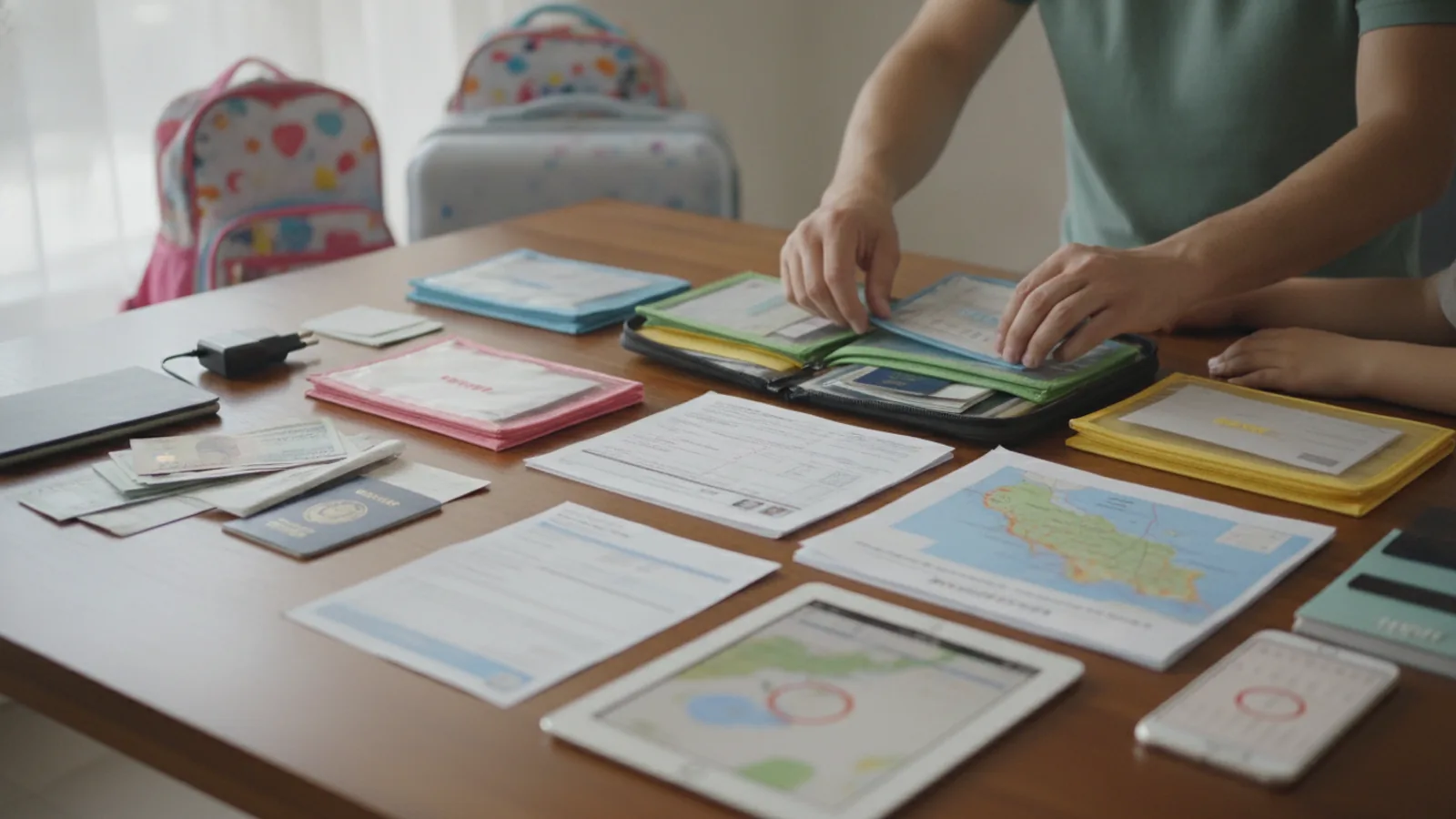
How To Organise Travel Documents For A Family Holiday
Organising travel documents for a family holiday can feel overwhelming, but with a clear system you can keep everything secure, accessible, and easy to find. This guide provides practical steps for gathering, sorting, storing, and managing passports, visas, insurance, bookings, and health documents. You'll learn how to create a single family folder, make digital backups, prepare for border control, and handle loss or damage while away. By following this plan, you'll reduce stress and ensure every family member has the right paperwork when needed.
Fast Answer
- Create a dedicated family travel folder with sections for each person and each trip type (passports, bookings, insurance, health).
- Make digital copies of every important document and store them in a secure cloud service or on a password-protected device.
Before You Start
- Collect every family member's passport, visa, and ID card and check that all names and dates are correct and valid for at least six months beyond your return date.
- Gather all booking confirmations: flights, accommodation, car rental, tours, and travel insurance, and ensure you have the correct reference numbers.
- List any special health needs such as prescriptions, allergies, or medical conditions, and obtain a letter from your doctor if needed.
- Choose a safe place at home to store the main set of physical documents, such as a lockable cabinet or a fireproof safe.
Step-by-Step Instructions
Create a Family Travel Document Checklist
Your first step is to make a complete list of every document each person will need. Start with passports, visas, and national identity cards, then add travel insurance certificates, flight and accommodation confirmations, car rental vouchers, and any pre-booked tour tickets. For each family member, note the document number, issue date, expiry date, and the location where you plan to keep it. If you are visiting a country that requires an entry visa, that visa must be listed separately. After you write your checklist, physically collect each original and put it in a large envelope or folder. This step forces you to see exactly what you have and what might be missing. The check matters because you can resolve problems at home, such as renewing a passport or applying for a visa, before you travel. Once you have everything in hand, you can move on to sorting them in a logical way.
Sort Documents into Family and Individual Sets
Now that you have all documents in hand, it is time to organise them into two groups: group one is a family folder that holds bookings, insurance, and travel plans that apply to everyone. Group two consists of an individual pouch or wallet for each family member, containing their passport, visa, and any personal health details. For example, put the flight booking confirmation and accommodation voucher in the family folder, but place each person's passport and boarding pass in their own pouch. If you have infants or young children, their birth certificates or adoption papers may be required, so keep those in the family folder as well. As you sort, check that every document has the correct name spelling and that the dates are still valid. The reason for this check is that a single misspelling or expired visa can stop you at check-in or border control. By separating family-level and person-level documents, you reduce the risk of grabbing the wrong paper in a hurry and you can quickly find what you need.
Make Digital Backups of Every Essential Paper
Use a smartphone or scanner to create a clear, readable digital copy of each passport page, every visa, all booking confirmations, insurance certificates, and health letters. When you scan a passport, capture the full opening page with your photo and details, and also scan any separate visa pages. Make sure the scans are upright and not too dark. Then save them as PDF or image files and store them in a secure, password-protected folder on a cloud service that you can access from any device. If you do not use cloud storage, you can keep them on a memory stick or in a password-protected note. For safety, also send a copy to a trusted friend or relative who is not travelling with you. The reason to make digital backups is that physical documents can be lost, soaked, or stolen, but digital copies give you proof of identity and booking numbers that you can use to reissue documents or contact authorities. Do not upload them to any public folder or share with strangers.
Create a Master Contact and Information Sheet
Write a single sheet that lists your emergency contacts, home address, embassy contact details for each destination, and your travel insurance helpline. Also note the booking reference numbers for flights, hotels, and car hire. Add the local emergency numbers for the countries you are visiting, such as 112 in Europe or 911 in the United States. Save this sheet in the family folder and also as a digital note. When you create this sheet, double-check that every phone number has the correct international dialling code. The practical check is to call your insurance helpline once before you travel to confirm that the policy is active and that the number you have matches the one on the certificate. This matters because if you never verify the details, you might find yourself unable to reach help in an emergency when you are far from home.
Pack Documents in Carry-On With Smart Separation
On travel day, place the family folder in the main carry-on bag that you will keep with you at all times. In that folder, keep the master contact sheet, insurance certificate, and all booking confirmations. Each adult should pack their own passport and personal documents in a separate pouch or wallet that stays on their body, such as a neck pouch or a buttoned jacket pocket. For children, give them a small pouch with their passport and a copy of the info sheet, but make sure they do not carry the originals alone. If you are travelling as a single parent or with a child, keep the child's documents with yours but in a different pocket. Do not put any original documents in checked luggage. The reason to separate is that carry-ons can be inspected and you may need to show papers before boarding or at immigration. Keeping a copy in the main folder and the original with each person means you can quickly present the right document when asked.
Set Up Daily Review and Safe Storage While Away
Once you arrive at your destination, choose a safe spot in your room such as a room safe or a locked drawer. Every day after breakfast, spend two minutes checking that each family member has their documents in their pouch and that nothing was left in the room. Before you go out, place the family folder back in the safe, and when you return, put it away again. Do not carry all originals with you every day; instead, take only the ID card or a copy of your passport, and a copy of your insurance certificate. At the end of the trip, do the same check before you head to the airport to ensure you have not lost anything. This daily habit prevents small mistakes like leaving a passport on a restaurant table or in a taxi. The check matters because it catches loss early, while you are still in a place where you can report it to the hotel or local police.
Quick Reference
| Situation | Action | Why it helps |
|---|---|---|
| A family member's passport is lost in a foreign city. | Immediately report the loss to the nearest local police station and obtain a police report, then contact your embassy or consulate for an emergency travel document. | A police report proves the loss to authorities and helps you get a replacement passport that you need to board your flight home. |
| The visa for your destination is not in the passport you are holding. | Stop and check every page of all passports to see if the visa is attached to a different family member's passport, and if not, use your digital backup to show proof and contact your embassy. | Visa errors are often simple mistakes in which visa is attached to which passport, but confirming early avoids a last-minute denial at the border. |
| You cannot find a printed booking confirmation at the hotel check-in. | Pull up the digital copy on your phone, show it to the receptionist, and ask them to verify your reference number and confirm your name. | Hotels accept digital proof as a record of your reservation, so you can still check in without the paper copy. |
Common Issues
- Passwords for digital copies are forgotten during the trip.: Store your digital backup folder password in a separate note or with a travel partner. Also create a password hint that is not obvious to a thief, and test access before you leave.
- Children lose their individual document pouches.: Attach the pouch to the child's clothing with a secure clip or use a small crossbody bag that closes fully. Check every time you move locations that the pouch is still on the child.
- Document scans are too small or blurry to read at border control.: Retake the scan in good lighting and zoom into the page so that all text is clear. Save the file at a high resolution and test reading it on your phone before you travel.
Advanced Tips
- Before you travel, photograph every family member's face and each passport page separately, so that if you need the photos for an emergency document you have them.
- If you are travelling to more than one country, keep a separate sleeve in your family folder for each destination's specific entry requirements, such as proof of accommodation or onward tickets.
- Set a reminder on your calendar for a week before departure to recheck that no new travel restrictions or document rules have been announced for your destination.
Final Checklist
- Confirm every passport and visa is valid for at least six months beyond your return date.
- Create a family travel folder with all booking confirmations, insurance certificates, and a master contact sheet.
- Make digital backups of every document and store them in a secure, password-protected location.
- Pack the folder in your carry-on and separate each person's originals in their own pouches.
FAQ
Should I carry original birth certificates for my children?
Generally, a valid passport or official ID is enough for most international travel, but some countries require a birth certificate or a notarised letter for minors. Check the official entry requirements for your destination and also for any transit countries. If you need one, carry a certified copy in the family folder.
What is the best way to store documents in a hotel room?
Use the room safe if available, and place the original documents in a waterproof pouch inside it. If there is no safe, lock them in your main suitcase and set a tamper-evident type lock. Never leave them on the bed or a table where they can be easily taken by a cleaner or a visitor.
What should I do if a document gets wet and becomes illegible?
Dry it carefully with a soft cloth, lay it flat, and do not rub. If it is unusable, contact the issuing authority or your embassy as soon as possible. In the meantime, use your digital backups as proof of your identity and booking details.