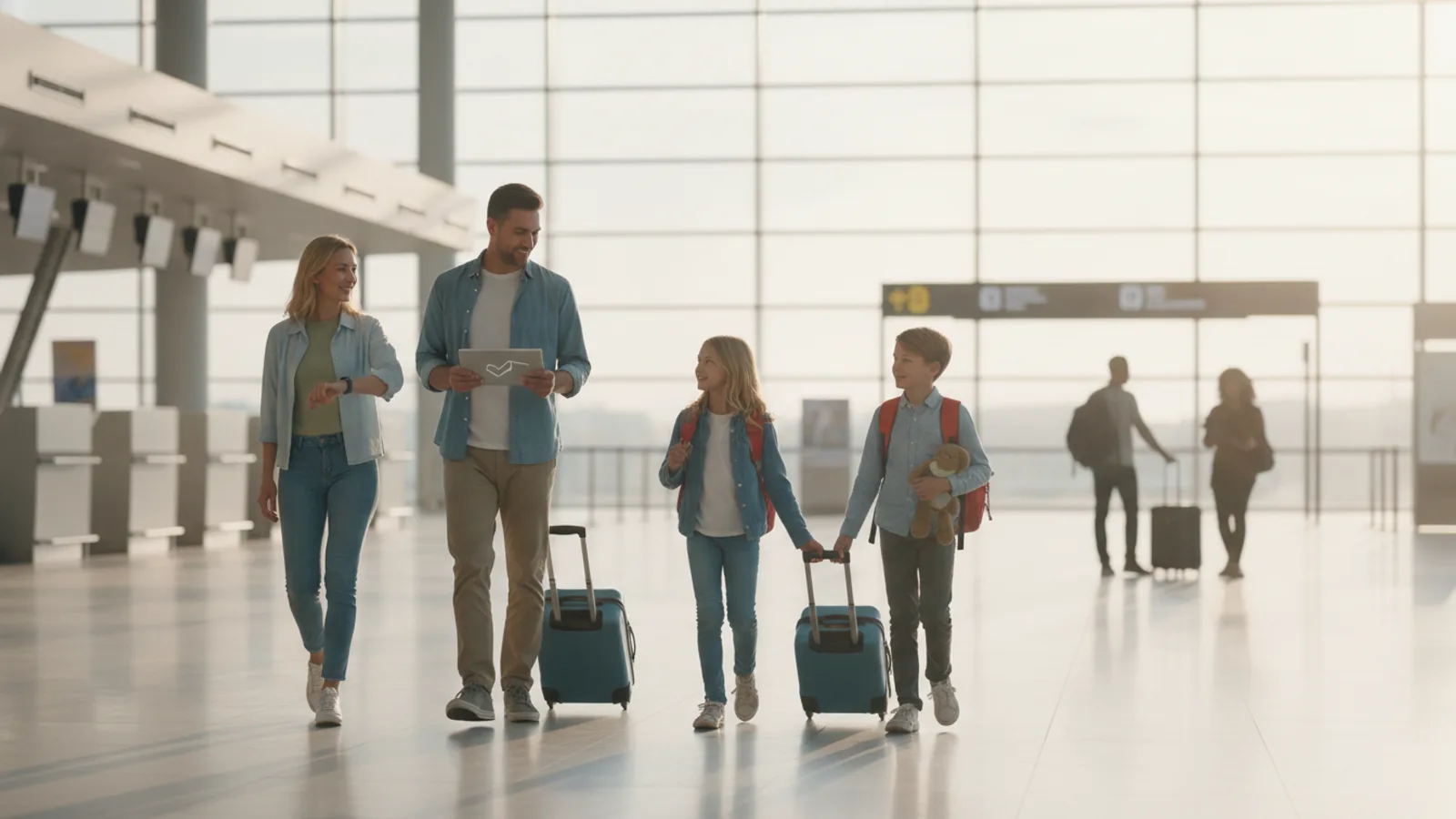
How To Create A Calm Family Airport Routine
Creating a calm family airport routine involves planning ahead, packing strategically, and maintaining a flexible mindset. This guide provides actionable steps to reduce stress, keep everyone comfortable, and navigate air travel smoothly from home to boarding. It covers preparation, security, waiting time, boarding, and in-flight strategies, emphasizing the importance of open communication and adaptability. By following this routine, families can transform potentially chaotic airport experiences into manageable, even pleasant, journeys, ensuring a positive start to any trip.
Fast Answer
- Start preparing the night before by checking flight status, packing all essentials, and ensuring everyone knows the plan to reduce morning chaos.
- Build in extra time at every stage—travel to airport, security, and walking to the gate—so you can move calmly and handle surprises without panic.
Before You Start
- Check your flight status and gate online or via the carrier's app at least 12 hours before departure, and recheck before leaving for the airport.
- Pack one carry-on per person (or a shared family bag) with only the essentials, and place all liquids, electronics, and documents in easy-access pockets for security.
- Create a simple family agreement: each member knows their role, such as who carries the documents, who watches the youngest, and what to do if separated.
- Prepare a small 'calm kit' with snacks, a favorite toy, headphones, a light blanket, and maybe a surprise activity to use during waits or turbulence.
Step-by-Step Instructions
Announce the Plan and Set Expectations
Begin by calling a short family meeting the day before travel. Clearly explain the timeline: when to leave home, how long the car ride or shuttle will take, and what to expect at each stage—curb check-in (if you have bags), security screening, and the walk to the gate. Describe the security process briefly: shoes off for kids over 12, jackets in bins, laptops out, and limit liquids per person. Ask each child to choose one small toy or book to carry in a personal backpack. Emphasize that everyone must hold hands or stay close when moving through crowded places. Set a code word (like 'penguin') that any family member can use if they feel overwhelmed or need to regroup. This pre-emptive talk reduces anxiety because children know what comes next. check: before you leave, ask each child to repeat the code word and the two most important rules (stay close, use inside voices). why: predictability lowers stress, and kids are more cooperative when they know the sequence of events.
Pack Strategically and Lightly
Limit each person to one carry-on suitcase (or a shared duffle) plus a small personal item, like a backpack. Place all travel documents—IDs, boarding passes (printed or on your phone)—in one accessible pocket of one bag. For security, keep all liquids in a single quart-sized bag (each container 3.4 ounces or less) and place it on top of your carry-on so you can grab it quickly. Electronics like a tablet or laptop should be easily removable; think about using a separate slim sleeve for the laptop so you don't have to dig through a jumble of clothes. Snacks are essential: pack non-perishable items like granola bars, pretzels, or fruit pouches, but avoid anything with a strong smell. Also include a small empty water bottle to fill after security. For each child, pack a change of clothes and a spare shirt for you, because spills happen. Roll clothes to save space and create room for souvenirs. check: after packing, lift the heaviest bag to ensure you can manage it. If not, redistribute items. why: minimizing luggage and keeping essentials accessible speeds up security and reduces physical strain, keeping everyone's energy high.
Dress for Comfort and Convenience
Choose loose, breathable layers for the whole family, such as cotton t-shirts and zip-up hoodies. Avoid belts with metal buckles and shoes that are hard to remove—especially for toddlers. Slip-on sneakers or easy-strap sandals are ideal because they speed up the security line. Put all loose items like coins, keys, and phones into the outer pockets of your backpack before you get to the front of the line. Dress babies and young children in outfits that are easy to change, like snap-crotch onesies or elastic-waist pants, and keep an extra layer handy for temperature changes on the plane. Consider using a bright scarf or hat for each child so they are easy to spot in a crowd. Also, apply sunscreen and bring a light jacket because airports can be drafty. check: ask each family member to stand, bend, and do a few jumping jacks to ensure clothing allows movement and no sharp edges. why: comfortable clothing and footwear reduce friction during security checks and keep kids content when you have to walk long distances.
Arrive Early but Not Too Early
Aim to arrive at the airport at least two hours before a domestic flight and three hours before an international one, but that doesn't mean you should immediately rush to the gate. Use the extra time deliberately: after you pass security, find a quieter spot near the gate (not the crowded main food court). Set up a 'family command center'—a bench or a spot on the floor with your bags in a neat row. Let kids stretch their legs with a short walk or a game of 'I Spy'. Then, one adult can supervise while another takes a child to the restroom. Re-check the departure boards periodically for any gate changes. If you have a long layover, that's not a time to relax completely; use it to refill water bottles, find a healthy snack, and do a 'reset' of your belongings. check: once you are at the gate, look at the boarding time and decide how much free time remains. If it's more than 45 minutes, plan a low-energy activity like reading or playing with a toy. why: arriving early reduces panic from unexpected traffic or lines, but too early leads to boredom and restlessness.
Navigate Security as a Team
When you reach the security screening area, assign one adult to be the 'bag director'—they will place bins, send them down the belt, and then collect them on the other side. The other adult focuses on the children: help little ones get their shoes and jackets off, and ensure small items (like toys or snacks) are put into a clear bag or a child's backpack. Keep your documents visible until you are told to put them in a bin. Do not put a laptop in the same bin as anything else. If possible, have kids older than 12 manage their own small bins for their shoes and backpack, but baby items like formula or breast milk are allowed in reasonable quantities; just take them out separately. Once through the metal detector, quickly gather all items and move away from the belt to a less crowded area to reassemble. check: before you leave the area, do a quick headcount and make sure every bag is claimed and all phones are back in pockets. why: teamwork divides the cognitive load, making the process faster and preventing accidental loss of belongings.
Board with a Calm Strategy
When your boarding group is called, resist the urge to rush to the front. Let people with strollers or disabilities ahead if you don't need extra time. Before you approach the jet bridge, gather your family: do a final restroom stop, layer on or peel off sweatshirts, and make sure each child has their backpack with a quiet activity (like a coloring book and crayons, or a tablet with headphones) accessible. If you are traveling with two adults, designate one adult to go on first with the carry-on luggage and for placing the family bags in the overhead bin, while the other stays with the kids and brings them on last. This reduces a traffic jam in the aisle. Use the time in the waiting line to review basic flight rules: keep seatbelts fastened, whisper in your seat, and use 'inside voices'. Acknowledge that flying can feel weird in your ears, and you have gum or a lollipop for takeoff and landing. check: just before stepping onto the plane, ensure every child has a have-to-go-to-the-bathroom moment behind them. why: systematizing boarding avoids confusion, ensures bags are stored efficiently, and helps kids settle into their seats with less fidgeting.
Quick Reference
| Situation | Action | Why it helps |
|---|---|---|
| You realize you've left a document (like an ID) at home after checking in online. | Decide immediately: if you live close by and have time, go back to retrieve it. If not, notify a ticket agent right away—they may offer alternative identification or a lost-luggage service, but do not hide the problem. | Addressing missing documents early gives you more options and prevents last-minute panic at the security checkpoint or boarding gate. |
| A child becomes restless or has a meltdown while waiting at the gate. | Take a short walk with the child away from the crowded seating area to a quieter corner, and engage them in a breathing game or physical movement like toe-touching. | Physical movement and a change of scenery can help reset a child's nervous system, lowering the chance of a full-blown meltdown. |
| You notice your flight is delayed but your kids are bored and hungry. | Review your snacks and activities inventory early; if you have time, find a nearby kiosk or restaurant that sells fruit or sandwiches, and set up a 'picnic' on the floor near the gate. | A proactive snack and activity plan turns a delay into an impromptu fun break, keeping everyone's energy stable and mood better. |
Common Issues
- One family member carries too much stuff and gets tired quickly, slowing everyone down.: Redistribute the weight before you leave home. Make each person responsible for their own backpack, but equalize heavier items (like laptops or books) so one person isn't overloaded. If you have a child under 5, their bag should be very light—just a comfort toy and a snack.
- Everyone is hungry at different times, leading to mood swings and expensive impulse buys.: Set a 'snack schedule' from the moment you leave home. For example, eat a light breakfast, then have a mid-morning snack in the security line, a bigger snack at the gate, and a simple meal on the plane. Pack extra non-perishable items in case of delays.
- You lose sight of a child in the crowded terminal because they wander off.: Establish a family rule: no one walks more than an arm's length ahead of an adult. Use a gentle reminder before every move: 'Hold hands or stay within arm's reach.' For younger children, consider attaching a small whistle to their backpack or using a pretend 'buddy system' with an older sibling.
Advanced Tips
- Teach kids to identify airport staff and security officers by their uniforms, and encourage them to approach these helpers if they ever feel lost.
- Use a digital or paper 'flight log' where each child can draw or write one thing they saw at the airport, turning the journey into a memorable adventure.
- Practice a 'dry run' at home: pretend you're going through security with shoes, bags, and a time limit, so kids know the exact sequence before you even leave.
Final Checklist
- Check flight status and gate 12 hours before, then again 2 hours before leaving home.
- Pack all liquids in a single quart bag and keep ID and boarding passes in one easy-access pocket.
- Dress everyone in comfortable layers and slip-on shoes to speed through security.
- Agree on a meeting point and a code word in case anyone gets separated in the airport.
FAQ
How early should we arrive at the airport with kids?
For domestic flights, plan to be at the airport two hours before departure; for international, three hours is safer. This extra time accounts for traffic, lines, and unexpected surprises like a delayed shuttle. Instead of trying to do too much, use the buffer to settle into a calm pace. You can always sit near the gate and watch planes while having a snack.
What are the best items to keep in a child's carry-on?
Pack a few quiet activities like a sticker book, a magnetic puzzle, or a small toy. Also include an empty refillable water bottle, a snack that isn't messy (like crackers or pretzels), and a light hoodie if they get cold. Avoid anything with small parts that can get lost in the seat crevices. For older kids, a loaded tablet with headphones is a goldmine, but bring a backup card game or a book.
How can we handle ear pain on takeoff and landing?
Give children something to suck on or chew during ascent and descent, like a lollipop, gum (for ages 4+), or a sippy cup with water for toddlers. If you have an infant, breastfeeding or bottle-feeding works wonders. You can also teach older kids to yawn or swallow repeatedly. If pain persists, ask a flight attendant for a warm towel to hold against the ear.